
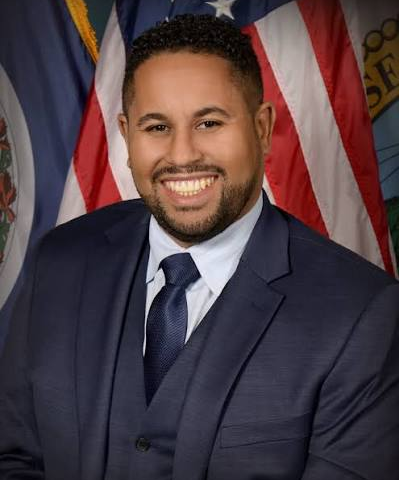
Boddye Will work with Board colleagues to promote expanded local authority through Prince William County’s 2027 Legislative Agenda
Prince William County Supervisor Kenny Boddye, who represents the Occoquan Magisterial District, announced that he supports members of the Virginia General Assembly who are calling for a special session to address the findings of the Commonwealth’s “Groundwater Supply East of Interstate 95” report. He added that he will also be urging state officials to grant local governments explicit authority to defer action on high-utility-demand industrial proposals and to strengthen the ability of localities to mitigate the energy, water and air quality impacts these types of projects may have.
“While the East of I-95 study does not provide Prince William-specific conclusions, and our own water provider reports that supply is adequate here, the findings reinforce the necessity of taking the time to better understand our ability to meet long-term demand before making irreversible land use decisions.”
Boddye had recently begun exploring the same legal question raised in neighboring Loudoun County: whether Virginia law currently provides local governments with the authority to pause new data center applications while officials study questions around water, power and air quality, providing jurisdictions the data and time they need to update best practices. Boddye noted that as the legislature calls to reconvene, state leaders have the ability to put that question to rest.
Boddye added that he will be consulting with his colleagues on the Prince William Board of County Supervisors, which is currently in summer recess, about adding the call for greater local authority to the Legislative Agenda that the Board sends to state lawmakers each fall.
“As a Board, we have asked time and time again for more authority to mitigate the impacts of hyperscale industrial development, and we are on the cusp of ending the ability for data centers to develop by-right in Prince William, enhancing our ability to negotiate for safeguards,” said Boddye. “This is not a new concern, but it is more clear than ever that it is both environmentally and economically sound to take the time needed to complete critical resource studies, implement the policy tools we have in development, and work with all stakeholders to mitigate concerns related to energy, water and air quality. Localities should not be asked to choose between economic growth and environmental protection. These can and must coexist.”
While water demand is grabbing headlines today, Boddye emphasized that the DEQ study highlights the urgency of ongoing discussions about impacts that extend to air quality and unprecedented electricity demand, and reinforces the need to better coordinate local land-use decisions with state, utility and regional infrastructure planning.
“The study elevates concerns about water, and Prince William is in the process of conducting its own groundwater assessment, but it is not the only system where timing matters,” Boddye said. “Virginia is working through how to provide backup power to sites without increasing pollution, and to serve increased electric loads while limiting emissions and preserving the progress made under the Virginia Clean Economy Act. This work must also include protecting reliability and ensuring that households are not left paying for infrastructure necessitated – or accelerated – by the richest corporations in the history of the world. State and local officials must continue to collaborate so that land use decisions do not outpace concrete plans for the infrastructure it takes to support them.”
“This is not about choosing between economic opportunity and environmental responsibility,” Boddye concluded. “Reliable water supplies are a foundation for both. State and local officials are developing essential data and policy tools as we speak. A limited pause would help communities make better-informed decisions and give the public greater confidence in the process.”