
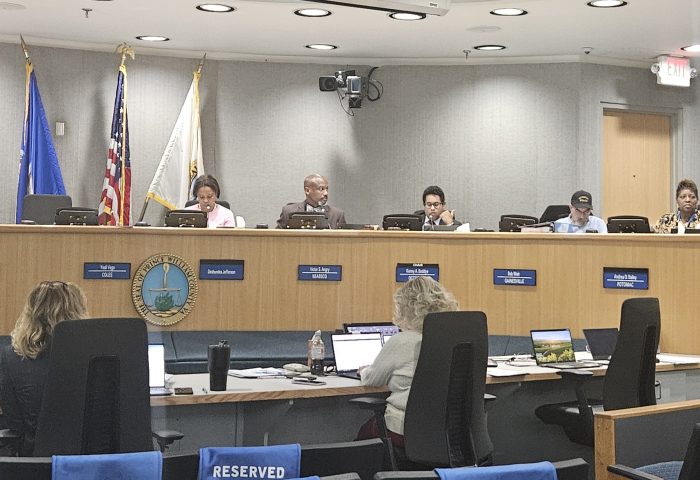
During my first full session as Finance & Budget Committee Chair, Board members tackled the complexities of meeting a diverse range of community needs while being careful stewards of taxpayer dollars. Here are key topics we covered during the Tuesday, April 1, F&B meeting:
Tax Relief: Positive revenue projections have created room to explore potential tax relief for residents—including options for reducing the Personal Property (vehicle) tax rate, something I strongly support, in combination with raising the tax rate for data centers from $3.70 per $100 of assessed value to $4.15 to match the rate in neighboring jurisdictions. Additionally, during the April 8 Board meeting, the CXO will recommend a real estate rate of $.90, lowered from the advertised rate of $.92.
Budget Priorities Review: We evaluated how key priorities align with the proposed budget. While there were some notable successes, such as bipartisan agreement to upgrade the failing land records system used by our Clerk of Court and to address retention issues at the Adult Detention Center, other important areas will require additional discussion and advocacy.
Transit Services: Changes in federal work policies have brought a steep rise in ridership. OmniRide prepared for these impacts as best as it could within its current capacities (reduced due to COVID-19 commuter patterns and reliance on a declining revenue source vis-à-vis the gas tax). We’re working to adapt service levels that meet evolving needs, decreasing gridlock by providing residents with more robust, reliable transit options.
Economic Preparedness: With economic uncertainty and tariff impacts from DC approaching our “shores” — such as the Prince William Health District having to let go of employees funded by Federal grants — the Board is taking prudent steps, such as increasing savings, revisiting the Data Center Stabilization Fund, investing in supportive services for affected residents, and maintaining flexibility to address changing conditions.
School Funding: We examined the difference between the School Board’s requested budget and the County Executive’s proposal. This included discussions about how school allocation adjustments would affect the tax rate and the need for a formal MOU under our revenue-sharing agreement to ensure proper accountability.
Fiscal Management: Our committee discussed potential adjustments to employee compensation planning and the possibility of modest revenue adjustments across agencies to prepare for potential economic challenges ahead.
Learn more about the FY26 Proposed Budget, including ways to share you priorities and questions: pwcgov.org/budget.