
By Supervisor Kenny A. Boddye
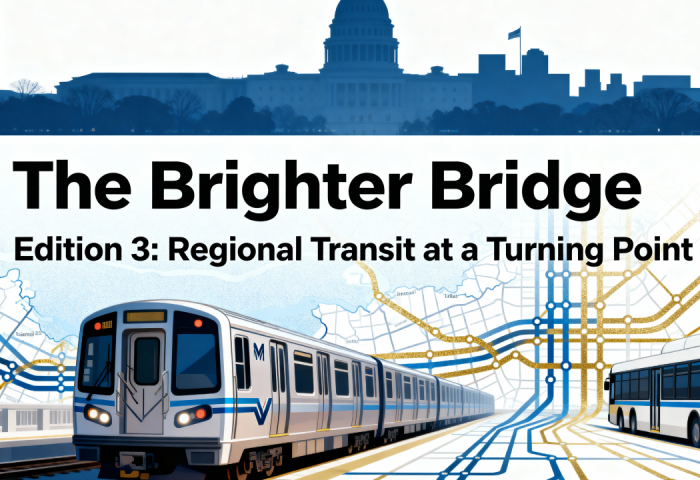
Today, the Boards of Directors for the Metropolitan Washington Council of Governments (COG) and the Washington Metropolitan Area Transit Authority (WMATA) took a historic step by adopting the DMVMoves Plan, a comprehensive blueprint designed to modernize, stabilize, and ultimately transform the transit network serving millions across the National Capital Region.
As the alternate representative for Prince William County on the COG Board, I made it a priority to be present for this vote because what was decided today will define not just the future of our transit systems, but the quality of life and economic competitiveness of the entire region. This is more than a plan. It’s a regional turning point.
A Collaborative Effort Years in the Making
The adoption of DMVMoves is the culmination of one of the most extensive regional collaborations we’ve undertaken in recent memory. Consider what went into this:
- 6 Task Force meetings
- 17 Advisory Group meetings
- 28 interagency working group sessions
Participation from 14 transit operators - Engagement from local, state, federal, business, labor, and community partners
This wasn’t a top-down directive. It was a collective endeavor.
COG Vice Chair Charles Allen and WMATA Vice Chair Paul Smedberg shepherded the process with patience and clarity. Fairfax County Government Executive Bryan Hill and Greater Washington Board of Trade CEO Jack McDougle chaired the advisory groups, grounding the effort in both government pragmatism and business reality.
And Metro – having earned the title of APTA’s 2025 Transit Agency of the Year – brought data, transparency, and a renewed commitment to being not just a service provider, but a regional partner.
The simple fact that this many entities reached alignment is significant. The fact that the plan is both bold and implementable is even more extraordinary.
What Adoption Means — And What It Doesn’t
With today’s vote, the region now has:
- A unified strategy to stabilize and modernize Metro’s capital program
- A shared commitment to build a regional bus priority network
- Clear steps toward integrating 14 transit providers into a more seamless customer experience
- A pathway for meaningful fare alignment, including universal transfers and youth ride-free
- A framework to pursue pooled procurements, shared training, and consistent performance reporting
But adoption is not the finish line. It is the foundation. For a large, diverse, geographically complex region like ours, success will depend on the work that happens between jurisdictions: at Northern Virginia Transportation Authority, at the Transportation Planning Board, in state legislatures, and on local boards of supervisors and councils. DMVMoves gives us the scaffolding. Implementation will determine what we build on it.
Why This Matters Deeply for Outer Northern Virginia
Representing Prince William County – and specifically the Occoquan District, home to the most congested stretch of I-95 in Virginia – I bring a perspective grounded in the lived realities of outer-suburban commuters. I know firsthand that our residents:
- Spend some of the longest commute times in the country
- Experience daily congestion from multiple counties to our south
- Have fewer high-quality transit options than inner jurisdictions
- Lose time, wages, and peace of mind to unreliable mobility
DMVMoves doesn’t fix any of that on its own. But it gives us tools we’ve never had before.
A Regional Transit “Spine” Becomes Possible
Paired with Virginia’s SJ28 analysis and ongoing NVTA investments, today’s vote gives us the opportunity to create a regional bus spine offering:
- Fast, frequent, all-day service along major corridors
- Priority infrastructure that keeps buses out of traffic
- Consistent fares and wayfinding
- Seamless connections to Metro, Virginia Railway Express (VRE), MARC, and local systems like OmniRide
This is the connective tissue that outer jurisdictions have lacked for decades — a mobility backbone that can expand beyond the initial corridors identified in the plan.
And Then Comes the Rail Transformation
With Long Bridge expansion now underway and with Virginia’s acquisition of the Manassas Line right-of-way, the region is on the verge of expanding commuter rail into true regional rail. That means:
- All-day, bidirectional VRE
- Better integration with MARC
- Increased reliability and frequency
- Through-running possibilities once thought impossible in our region
DMVMoves doesn’t build rail. But it does prepare the region to capitalize on those investments on day one.
Millions Are Counting on Us, and Today, We Delivered the First Step
Across the region, millions of people – workers, families, students, seniors, job seekers, and employers – need a transportation system that works for their daily lives. Today’s vote gives us a chance to:
- Shorten commutes
- Expand access to opportunity
- Reduce emissions and improve air quality
- Strengthen our economic competitiveness
- Make transit predictable, reliable, and dignified
- Build the foundation of a true regional network
Regional leaders owe it to the people we serve to follow through on what we adopted today. And to make sure that, unlike past regional efforts, this one moves from vision to reality. Because when we get mobility right, we unlock opportunity; not just for one jurisdiction, but for an entire region. Today we took the first big step. Now the real work begins.