
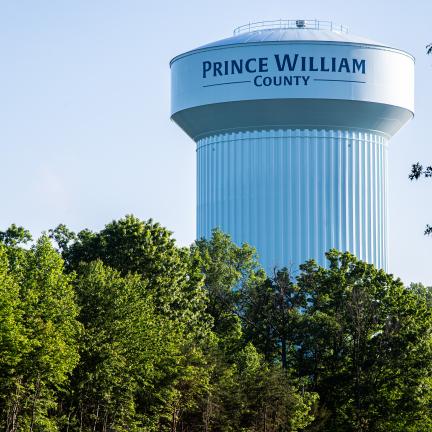
What do we know about our public water supply? Prince William Water (PWW) has provided some reassuring news.
The utility’s current planning indicates that our public water system can meet projected demand, which includes housing and other development envisioned in the 2022 Comprehensive Plan, through 2040. Of course, we must look beyond that, and continue to invest in the monitoring, management, and project needed to accommodate our community well into the future.
Prince William Water’s most recent detailed analysis looked ahead through 2045. It found sufficient water capacity available from Fairfax Water, while also identifying additional Potomac River supply needed by 2040 and transmission improvements to ensure they can move water where it is needed. Like with any good capital planning, you forecast future demand, identify where capacity will be needed, and make investments before the system reaches its limits.
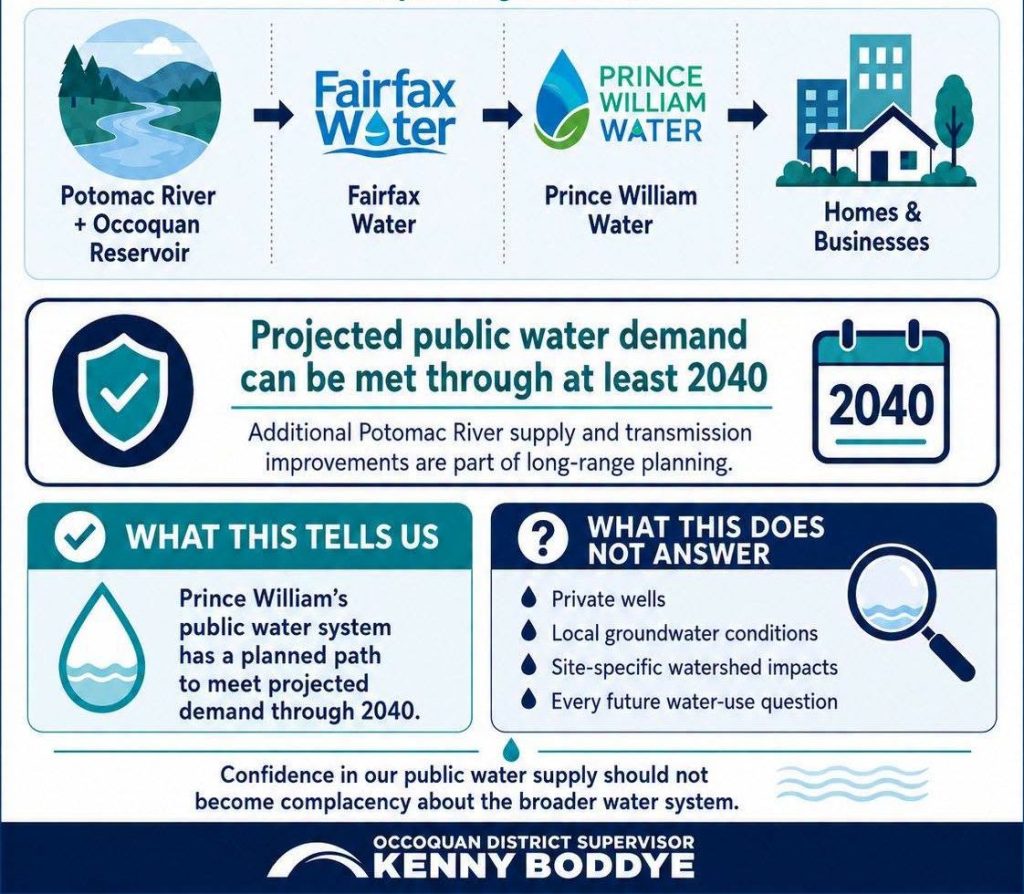 This assessment is reassuring, particularly in light of the East of I-95 Aquifer Study —which, while it does not look at our resources, is a reminder that we cannot afford to let confidence in our water supply slip into complacency about the broader sytem. We still have our own water questions left to answer here in Prince William.
PWW’s anlaysis doe not tell us everything we need to know about private wells and groundwater. Nore does it answer every question about how changing land use affects streams, recharge, or the Occoquan watershed. And it does not mean we can stop planning for drought, climate change, or future industrial demand.
This variety of questions is exactly why several different studies and planning efforts exist. At the recommendation of its Sustainability Commission, the County partnered with the U.S. Geological Survey to conduct a Soil-Water-Balance recharge study of the fractured-rock Culpeper Basin aquifer that supplies thousands of private wells in the western part of Prince William. I’m also in support of the commission’s recent unanimous recommendation that Prince William be included in the Commonwealth’s broader groundwater management efforts so that local data can inform future state policy.
This is the right balance in this conversation: acknowledge what our water professionals are telling us while continuing to ask the questions their analysis was not designed to answer. I look forward to having more data we can use to protect our drinking water now and into the distant future. Stay tuned for updates as study results become available.