
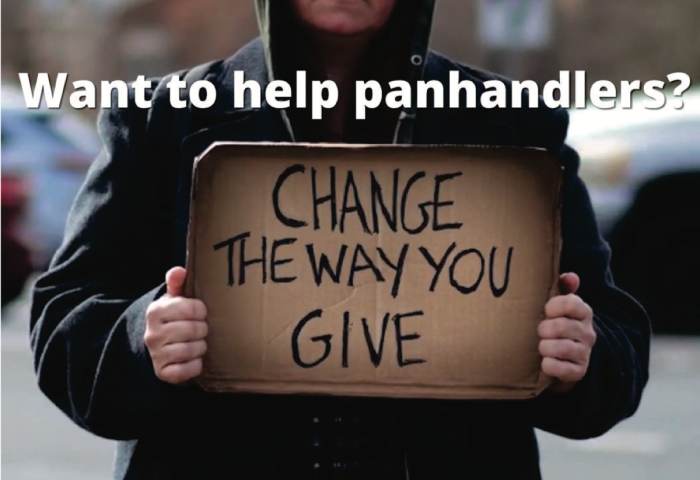
In October, County staff proposed a Panhandling Response Initiative, an innovative, comprehensive approach to creating lasting change. Elements included connecting panhandlers to resources, creating a jobs program, and encouraging “givers” to shift donations to local nonprofits that address root causes of panhandling.
When that initial, three-pronged approach failed to gain Board support in Oct. 2024, Supervisor Boddye continued to engage key stakeholders—including police, unhoused community members, and business owners—and collaborated with County staff to reintroduce core campaign elements for Board consideration. Thanks to his determination and the dedication of County staff, the Board unanimously approved the “Give Where It Counts” campaign on Nov. 26 and the County communications team rolled out messaging the next week.
“Give Where It Counts” encourages givers to redirect contributions, donating to nonprofits instead of directly to individuals who panhandle. The dual goal is to reduce panhandling by making it less profitable and by shoring up resources that can reduce the need to panhandle, supporting local nonprofits that address critical needs like housing, food, mental health and job training. Running through December and resuming during spring and summer, the campaign reflects Prince William County’s commitment to fostering a safe and compassionate community.
Join the “Give Where It Counts” campaign and drive meaningful change and offer hope to those in need. Visit pwcva.gov/panhandling to donate to County-vetted nonprofits and to access a community toolkit with digital and print materials to help spread awareness.
Question: Why can’t we just arrest people panhandling in medians?
Answer: Targeting panhandling in medians would have minimum impact, drain traffic safety resources, and put our police officers in legal jeopardy—Enforcing laws against constitutionally protected activities could expose officers to personal lawsuits. Furthermore, an enforcement-based approach would merely shift undesirable activity to other areas, such as shopping centers. Importantly, unlike panhandling, intimidating behaviors are not constitutionally protected and are already illegal. The Board can and should equip officers to respond more robustly to reports of aggression and lobby the state for expanded authority to stop repeat offenders.
Additionally, panhandling is not a moral failing or a crime. It is a symptom of societal and personal challenges. Food insecurity, mental health struggles, substance misuse, and the rising cost of living are just a few reasons somebody may find themselves asking for assistance at a busy intersection. (This CMAJ report offers some insight into panhandling.)