
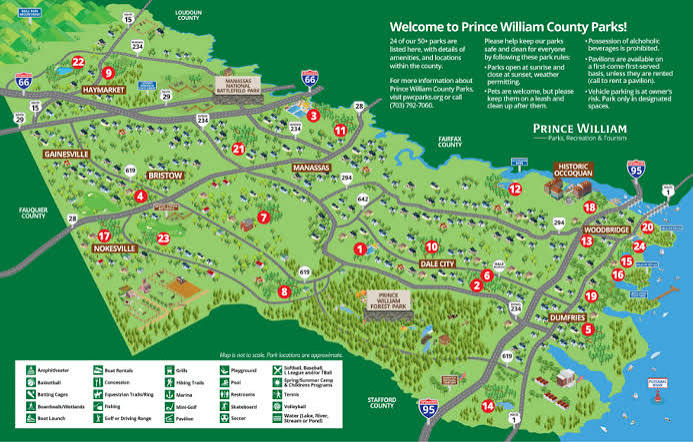
A few days ago, I shared some updates on trail projects around the Occoquan District and asked residents what they would like to see from our parks and trails system. You had plenty of ideas — and they went well beyond simply asking for more trails.
Residents raised questions about accessibility and adaptive recreation, protecting mature trees, expanding the use of native plants, removing invasive species, improving connections to neighboring jurisdictions, accommodating e-bikes and other new forms of mobility, creating more recreation and community-center opportunities, and improving trail safety, maintenance and emergency access.
I also heard a consistent theme: as we expand recreational opportunities, we need to protect the natural resources that make these places worth visiting in the first place.
That feedback comes at a particularly useful time, because Prince William County is moving forward with two larger planning efforts that will help shape the future of recreation in our community.
A new Trails Master Plan
First, the County’s new Trails Master Plan has completed review by County departments and the County Attorney’s Office and has been endorsed by the Parks & Recreation Commission. It is currently expected to come before the Board of County Supervisors for consideration on October 6.
A trails plan might sound like a map showing where to build paths. I think the conversation should be much broader.
Where are the missing connections in our network? Can children safely walk or bike from their neighborhood to a school or park? Can someone using a wheelchair enjoy more of our trail system? Are we making logical connections to Fairfax County and the larger regional network?
We also need to think carefully about how trails serve multiple purposes at once — recreation, transportation, access to nature and community connectivity — while respecting the character and environmental value of the spaces they pass through.
Planning for future recreation centers
At the same time, Parks & Recreation is studying the need for additional recreation centers in both eastern and western Prince William County. The first phase of that Recreation Center Feasibility Study is now complete and under staff review.
As our population grows and changes, we need a better understanding of where residents already have good access to recreation, where gaps exist, and what kinds of facilities will best serve our communities in the years ahead.
And access is about much more than geography.
It also means affordability, accessibility for people with disabilities, programs for different ages and abilities, transportation options, hours of operation, and whether a facility actually reflects the needs of the community around it.
Your feedback is part of the planning process
I have already shared the feedback from my earlier post with Parks leadership.
These plans will involve acreage calculations, facility standards, maps and technical analysis. All of that is important. But I also want them informed by something that cannot always be captured in a spreadsheet: how residents actually experience our parks, trails and recreation system.
So I want to keep the conversation going.
What would make Prince William County’s parks, trails and recreation facilities work better for you and your family? What are we missing today, and what should we be planning for over the next decade?
Keep the ideas coming. I’m listening.