
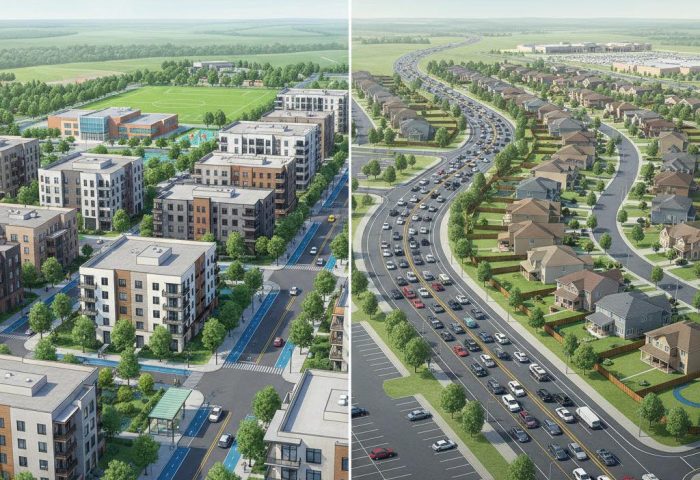
I introduced the Housing Fast Track Resolution so we can move faster on the parts of our zoning overhaul that actually help people stay housed here in Prince William County.
In plain language, it’s about:
– Getting the housing reforms to the front of the line, not buried in a years-long process
– Focusing on real options people can use:
* small-scale homes on appropriate faith-owned and public land
* Accessory Living Units (backyard/over-garage units)
* smaller/right-sized homes
– Making sure we have clear timelines, analysis, and legal review so changes move from idea to action
– Using better tools and engagement so residents actually see and shape what’s being proposed
This resolution is about treating housing affordability like the urgent issue it is by prioritizing zoning and policy changes that help us:
• Add more attainable housing options
• Modernize outdated rules that slow good projects down
• Keep current and future generations from being priced out of Prince William
Smart Growth
Whenever we talk about housing, I hear a real and understandable fear:
Are we overwhelming our roads, our schools, and cutting down every tree?
That concern deserves an honest answer.
Here’s the truth: sprawl, not smart growth, is what puts the greatest strain on traffic, schools, and green space.
When housing is pushed farther and farther out:
• commute times grow
• traffic congestion worsens
• infrastructure costs skyrocket
• more forests and open land are consumed
The Housing Fast Track Resolution is about doing the opposite.
It prioritizes updating our zoning rules so more housing can be built:
• closer to jobs
• near existing roads, schools, and utilities
• in places already planned for growth
That means less driving, not more.
It means smaller, incremental projects, not massive clear-cut subdivisions.
It means protecting open space by reducing pressure to sprawl outward.
Just as important: this resolution does not approve any specific project. It accelerates the policy work that sets clearer rules, stronger standards, and better planning before projects ever come forward.
Growth is already happening.
The question is whether we let it happen haphazardly or guide it responsibly.
Fast-tracking smarter rules is how we protect what makes Prince William County home.
ALUs
A parent in my district wrote to me this past weekend about her son, a Prince William County Public Schools teacher.
He loves his students, wants to keep teaching here, and wants to build a life here. But his only realistic options right now are renting with roommates indefinitely or moving back in with his parents.
Her message was simple:
“We’d build an accessory unit on our property in a heartbeat if the county allowed it.”
That’s exactly why I introduced the Housing Fast Track Resolution and why I’ve been pushing for tools like:
– Accessory / secondary units (ALUs) so families can safely add a small, code-compliant unit on their property
– Tiny and right-sized homes for people just starting out or wanting to downsize
– Exploring magnet or workforce-style housing models for teachers, first responders, and other essential workers, similar to ideas used in other Northern Virginia jurisdictions
This isn’t theoretical. It’s about:
– Whether the people who teach our kids can afford to live here
– Whether seniors can stay close to family
– Whether young adults can build a future in the community they grew up in
Tiny Homes
Every time a new housing idea comes up, I hear the same concerns: traffic, schools, green space, and the fear that we’re ‘packing people in.’
So let’s talk about tiny homes, plainly and honestly.
Tiny homes are small-scale, optional housing. They are not high-rises. They are not massive subdivisions. And they are not about tearing down every tree in Prince William County.
When done right, tiny homes:
• use far less land than sprawl
• generate less traffic than large developments
• place minimal strain on schools
• fit into existing neighborhoods without overwhelming them
They create choices for:
• seniors who want to downsize but stay local
• adult children who can’t afford today’s prices
• teachers, first responders, and caregivers
• homeowners who want flexibility on their own property
Most importantly, they allow us to add housing without erasing what makes our communities feel like home.
And like any housing tool, how tiny homes are used matters. Communities get to set standards, locations, and expectations. Tiny homes can serve different purposes depending on how a community chooses to use them.
This isn’t about forcing change.
It’s about giving people more options, thoughtfully and responsibly, at a time when too many are being priced out.
That’s exactly what the Housing Fast Track Resolution conversation is about – urgency with guardrails.